
Anchoring the Blue Pacific: Strategic Island Partnerships in Micronesia and Beyond
In plain terms, the U.S. wants these countries to thrive as sovereign, self-determining states and to remain friends of America, rather than becoming pawns in someone else’s game.
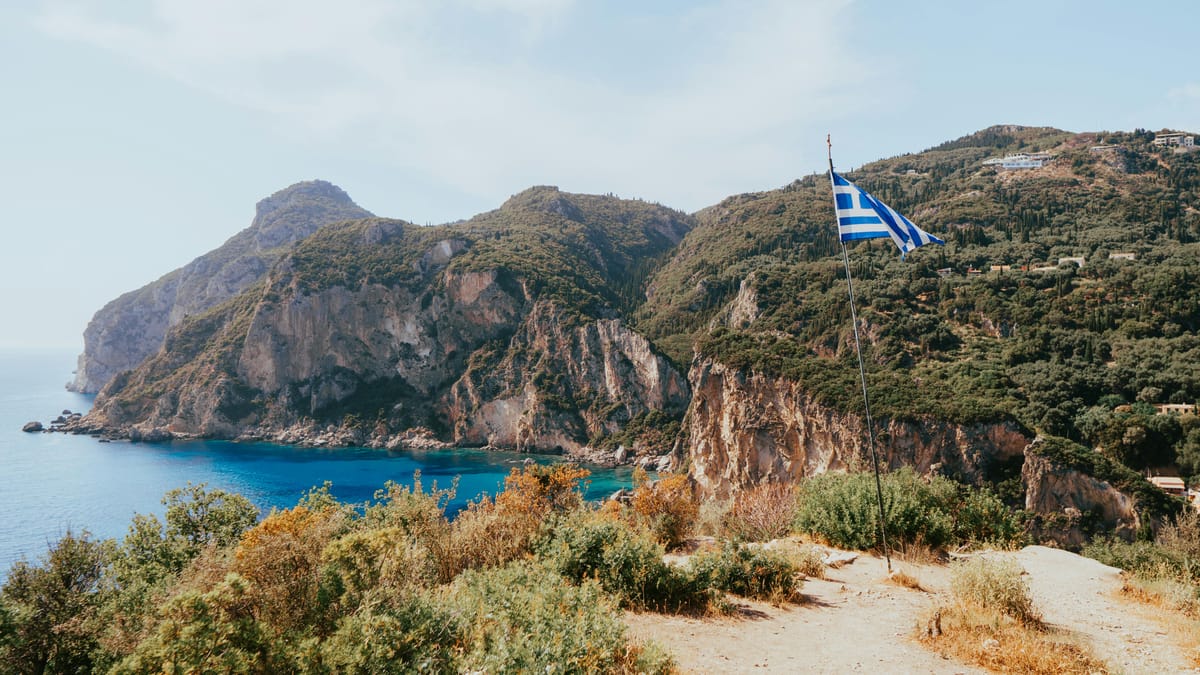
Scattered across the vast expanse of the Pacific are small island nations that, despite their size, hold outsized strategic significance. The Marshall Islands, the Federated States of Micronesia, Palau, and their neighbors collectively command immense Exclusive Economic Zones of ocean, and their political alignment can influence regional dynamics, from votes in the UN to military access in the Pacific. For decades, the United States has been a primary partner to many of these nations, most notably through the Compact of Free Association (COFA) agreements that give the U.S. defense responsibilities and base rights in exchange for economic support and open migration.
Now, as great-power competition reaches even the tiniest atolls, Washington is doubling down on what some call the “Blue Pacific” strategy: bolstering partnerships with Pacific Island countries to support their development and security while preventing any hostile foothold in these waters. In plain terms, the U.S. wants these countries to thrive as sovereign, self-determining states and to remain friends of America, rather than becoming pawns in someone else’s game.
Renewing Ties with the Freely Associated States
Three Micronesian countries, Palau, the Federated States of Micronesia (FSM), and the Republic of the Marshall Islands, have unique relationships with the U.S. under COFA, which essentially make them part of the American strategic family. These agreements, set to be renewed in the mid-2020s, have been a focal point of U.S. Pacific strategy. In early 2023, the U.S. reached an agreement in principle to renew the Compacts, pledging increased economic assistance (including funding for infrastructure, education, and climate resilience) over the next two decades. In return, these states continue to grant the U.S. exclusive military access, effectively ensuring that no other power can establish bases in a region spanning much of the Northern Pacific.
Beyond the hard security aspect, the U.S. has been keen to demonstrate respect and attentiveness to these partners. High-level visits (including by the Secretary of State) to Palau, FSM, and the Marshall Islands in 2023-24 aimed to reassure locals that their voices are heard, for instance, by addressing lingering nuclear legacy issues in the Marshalls and supporting sustainable fisheries on which local economies depend. By locking in these extended partnerships, the U.S. buttresses what some strategists dub an “island chain” of friendly territory reaching across the Pacific.
Crucially, the benefits are mutual: these small nations gain not only funding but also the right for their citizens to live, work, and study in the United States, a provision that has fostered deep people-to-people ties. For example, many leaders and professionals from Micronesia were educated in U.S. schools and have served in the U.S. military, creating a kinship that undergirds the political agreements. The renewal of the COFA agreements, therefore, is more than a transaction; it’s a renewal of familial bonds. It also sends a message to others in the region: the U.S. honors its commitments and is here to stay in the Pacific.
Reaching Out to the Wider Pacific Islands
Beyond the COFA states, the broader Pacific Islands, from Polynesia to Melanesia, have become a new arena of strategic outreach. Countries like the Solomon Islands, Fiji, Papua New Guinea, Tonga, and Samoa historically had less U.S. engagement, often relying on regional patrons Australia and New Zealand or courting various external aid donors. However, China’s recent forays, such as a controversial security pact with the Solomon Islands in 2022, jolted Washington into greater action.
The U.S. has since opened or reopened embassies in several Pacific nations (including Solomon Islands and Tonga) and unveiled a Pacific Partnership Strategy focusing on issues these states prioritize: climate change adaptation, disaster relief, healthcare, and sustainable development. This aligns with a key lesson: for Pacific Islanders, security isn’t just about warding off invaders, it’s about human security, will their islands survive rising seas, and will their youth have economic opportunities at home?
By focusing on those existential concerns, the U.S. and its allies aim to earn lasting goodwill. For instance, the U.S., through USAID and the PGII initiative, is financing clean energy projects and climate-resilient infrastructure (like sea walls and freshwater systems) in places such as Kiribati and Vanuatu. It is also expanding educational and scholarship programs that bring Pacific Island students to universities in Hawaii and other U.S. states, recognizing that investing in human capital builds relationships for generations. Such efforts help counter one of China’s advantages, its frequent offers of buildings and roads, by providing alternatives that are arguably more attuned to local needs and come with training for locals rather than imported labor.
Strategically, these engagements aim to deny any hostile power a military foothold among the islands. Even a small radar site or an access agreement could shift the balance in a region where distance is both a barrier and a buffer. Partnering closely with Australia and New Zealand (traditional Pacific stakeholders), the U.S. has agreed on a “Partners in the Blue Pacific” coordination framework to avoid duplication and ensure that aid and investment effectively reach the right areas. Together, they’ve had successes: in 2023, Papua New Guinea signed a defense cooperation agreement with the U.S., granting U.S. forces access to PNG ports and airfields for the first time; a clear sign that even the larger Pacific states see value in hedging toward America.
Challenges: Navigating Local Politics and Expectations
Working with the Pacific Islands is not without its challenges. These nations are small, but their politics can be complex. Leadership turnovers or local controversies can swing their international alignments. Some Pacific leaders have become adept at playing major powers against each other to extract more aid, a reality Washington acknowledges it must navigate. The Solomon Islands, for example, has at times balanced Australia, the U.S., and China, securing aid from all. The U.S. approach has been to stay patient and consistent.
Even if a Pacific government temporarily tilts toward Beijing, the U.S. keeps communication open and offers help on apolitical issues like disaster response. This was evident when a volcanic eruption rocked Tonga in 2022: U.S. military aircraft delivered aid alongside Australian and New Zealand forces, reinforcing that when calamity strikes, democracies deliver with no strings attached.
Another challenge is scale and sustainability. Pacific Island economies are small and often heavily aid-dependent. They will need continuous support and engagement, not one-off projects. The U.S. is trying to address this by focusing on capacity-building, for instance, helping Pacific fisheries agencies improve their management so that island nations can better monetize their rich tuna stocks without overexploitation.
Additionally, Washington is mindful of cultural sensitivity. It seeks counsel from Pacific Island leaders and community elders on how projects are implemented, often working through or alongside Australia, New Zealand, and Japan, which have longer histories in the area. This collaborative spirit, treating Pacific nations not as chess pieces but as partners with agency, is crucial to success.
Looking Ahead: A Secure and Thriving Pacific Community
The coming decade will test how well the U.S. can solidify the Pacific Islands as a zone of partnership and peace. If by 2035 the Freely Associated States are flourishing with improved infrastructure and education (and firmly aligned with the U.S.), and if the broader Pacific Island Forum members largely view the U.S. as a reliable partner on climate and development issues, then the Blue Pacific strategy will be deemed a success.
In that scenario, we might see a network of U.S.-supported climate-monitoring centers and disaster-response hubs spread across the Pacific, jointly operated by Americans and Pacific Islanders. We may also find that no new “dual-use” ports or airstrips have fallen under the control of America’s strategic competitor, a sign that attempts to militarize the Pacific by those competitors have been effectively headed off.
Conversely, if the U.S. were to neglect these relationships, it could find that, piece by piece, influence erodes and potentially unfriendly presences take root, a radar station here, a naval resupply arrangement there. Thus far, however, Washington has shown a renewed commitment to the Pacific, and it has been generally well received. Pacific leaders appreciate being heard on their core concerns. The U.S. challenge now is to maintain that momentum. These islands may be small, but they represent a big test of America’s ability to be a partner of choice. By anchoring the Blue Pacific in shared values and concrete support, the United States is working to ensure that this enormous ocean, covering a third of the globe, remains a conduit for prosperity and not a chessboard for rivalry.
Comments ()