
Resilient Supply Chains: Securing Rare Earths and Maritime Lifelines
For the United States, these wake-up calls have transformed supply chain resilience into a national security priority.
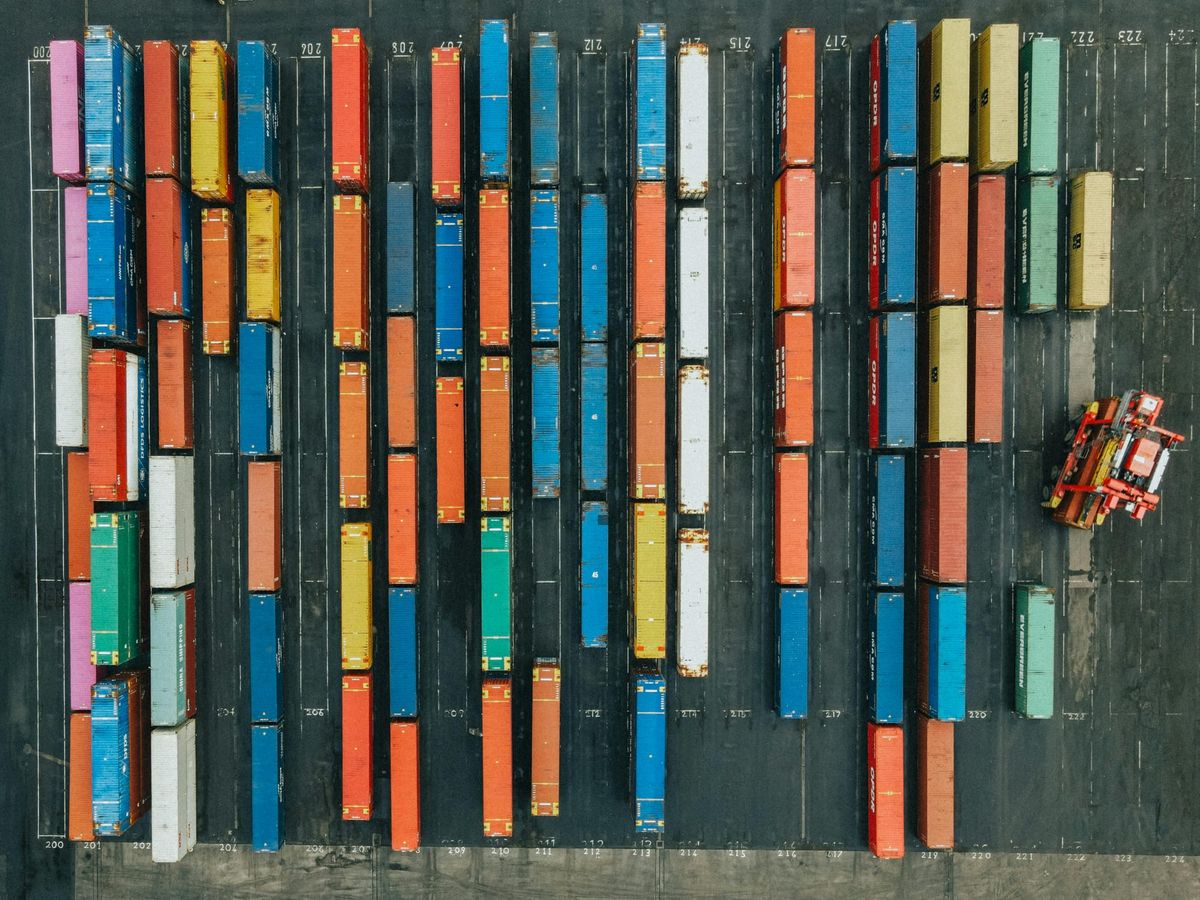
The COVID-19 pandemic and recent geopolitical shocks have laid bare a hard truth: the Indo-Pacific’s supply chains, as currently configured, are vulnerable. From a sudden shortage of medical masks to semiconductor bottlenecks and fuel price spikes, events of the past few years revealed how quickly disruptions in one part of the region can cascade globally. For the United States, these wake-up calls have transformed supply chain resilience into a national security priority.
The traditional model of chasing lowest-cost production, often in China, is giving way to a “friend-shoring” model, sourcing and manufacturing key goods among allied and partner nations so that supply lines cannot be easily severed by political coercion or conflict. The latest U.S. strategic guidance explicitly emphasizes strengthening supply chains for critical resources, such as minerals and rare earths, to bolster American resilience. In the Indo-Pacific context, this means forging new links with trusted partners, investing in alternative production hubs, and safeguarding vital maritime trade routes that are the arteries of the world economy.
Rare Earths and Critical Minerals Diversification
Few supply chain issues have garnered as much attention as rare earth elements and other critical minerals. These are the raw materials, from lithium and cobalt to neodymium and nickel, that power advanced technologies such as electric vehicle batteries, smartphones, and missiles. Today, China dominates many of these supply chains, processing the majority of the world’s rare earths and critical materials. Washington has determined that this dependence is untenable. The strategy now is two-fold: develop new sources of these minerals outside of China, and build processing capacity in friendly territories. Progress is underway. By 2029, the United States and its allies aim to have major rare-earth separation facilities operating in countries such as Australia, the United States, and elsewhere in the allied world, significantly reducing China’s chokehold on these inputs.
Indeed, recent U.S. diplomatic efforts have centered on critical mineral partnerships. During a 2025 Indo-Pacific summit tour, U.S. leaders inked agreements with countries such as Vietnam, Malaysia, and Thailand to collaborate on mining and processing critical minerals and to share geological data and expertise. Similarly, the Quadrilateral Security Dialogue (Quad) has established a working group on critical mineral supply, aligning the resource strategies of the U.S., Japan, Australia, and India.
To support these initiatives, the U.S. is leveraging its development finance tools. The U.S. International Development Finance Corporation (DFC) and the Export-Import Bank are offering loans and guarantees to jump-start mining projects in friendly nations, from rare-earth mines in Australia to lithium extraction in India. The idea is to offset the high upfront costs that often deter investment in new mines or processing plants. American officials are also coordinating with European partners and Japan, many of whom share the same concerns, to ensure efforts are complementary. Over time, this collaborative approach will create a resilient mineral supply network. One plausible future arrangement: Australia could refine raw rare-earth ore from its mines, while Vietnam or India hosts factories to produce rare-earth magnets, all backed by U.S. and allied investment. If one node is disrupted, others can quickly fill the gap to keep supplies flowing. This is the essence of supply chain resilience: no single point of failure can bring the system down.
Securing Maritime Chokepoints and Trade Routes
Physical materials are one side of the coin; the other is the maritime highways that move goods and energy. The Indo-Pacific’s sea lanes carry a large share of global trade, including the fuel, parts, and finished products that keep economies humming. But they also feature infamous chokepoints: narrow passages like the Strait of Malacca, the Sunda Strait, or the Lombok Strait in Southeast Asia, through which much of East Asia’s oil imports and Europe-Asia trade must pass. Likewise, the South China Sea is not only a contested region but also a conduit for trillions of dollars in cargo annually.
The U.S. and its allies are intensely focused on keeping these routes open and secure. A major aspect of this is deterrence: maintaining a robust naval presence and patrol patterns that dissuade any actor from attempting to blockade or control international waterways. For instance, the U.S. Navy routinely conducts freedom-of-navigation operations through the South China Sea and encourages partners like Japan, Australia, and the UK (which periodically deploys warships to the region) to do the same, signaling that the global community will not tolerate any closure of these commons.
Beyond military presence, there are cooperative measures to bolster maritime supply chain security. One is improving maritime domain awareness, essentially, the ability to monitor shipping lanes for threats or disruptions. Through programs such as the Indo-Pacific Maritime Security Initiative, the U.S. is helping littoral states like Indonesia, the Philippines, and Vietnam upgrade their coastal radar, satellite surveillance, and information-sharing networks to quickly detect problems such as piracy, blockages, or suspicious naval deployments. Another strategy is developing redundant routing and infrastructure. Countries are discussing ways to increase the capacity of alternate routes (for instance, using the Sunda or Lombok Straits as backups to the Malacca Strait, or overland pipelines and railways that bypass vulnerable chokepoints).
Initiatives like the India-Middle East transport corridor plan, while outside the Indo-Pacific per se, reflect a broader trend of building new links that reduce over-reliance on any single route. Within Asia, Japan and India have even championed an Asia-Africa Growth Corridor that would enhance connectivity from Indian Ocean ports to Southeast Asia, offering more options for trade flow.
Crucially, ensuring maritime lifelines also involves diplomacy and legal frameworks. The United States continues to advocate for the principles of the UN Convention on the Law of the Sea (even though the U.S. Senate has not ratified it) and supports ASEAN efforts to negotiate an effective Code of Conduct for the South China Sea. By strengthening international norms around freedom of navigation and unimpeded commerce, Washington bolsters the legal and moral foundation for keeping sea lanes open. It pairs this with practical contingency planning: working with allies on joint logistics agreements so that, for instance, U.S. and Japanese tankers could refuel each other’s ships in an emergency, or Australian and Indian ports could mutually accept diverted cargo if a major transshipment hub went offline.
Looking Ahead: A Stable, Networked Supply System
The drive for supply chain resilience is a long-term endeavor, but there are clear signposts to watch for. In five years’ time, if the strategy is on track, we would expect to see tangible progress, such as multiple non-Chinese rare-earth processing facilities up and running, a diverse set of suppliers for key items like battery components and pharmaceuticals, and formalized protocols among Indo-Pacific nations for jointly handling shipping disruptions.
By 2035, in the most optimistic scenario, the Indo-Pacific’s economic system would be markedly more shock-proof: a factory fire in one country or a sudden export ban by another would be met with rapid compensation by partners, blunting the impact. Allied nations would collectively hold strategic stockpiles of critical commodities, coordinated so that each can draw on a shared reserve in times of crisis. We might also see a region-wide early warning system for supply chain disruptions, a kind of “strategic supply watch” where countries exchange real-time data on inventory levels and shipping status for essential goods.
Of course, building such a resilient network comes with costs and challenges. Diversifying supply chains often means higher short-term expenses as production shifts to new locales or redundancies are built in. There is also the matter of trust: partners need confidence that if they invest in alternatives, the network will indeed come to their aid when needed. The U.S. has a leading role in reinforcing that trust by consistently supporting partners’ economic security and not retreating when certain crises ebb. Another challenge is ensuring that economic efficiency and resilience find the right balance; too much redundancy could be economically inefficient, whereas too little leaves the system brittle. The next decade will be an exercise in fine-tuning this balance.
Yet, the direction is set. The United States and its Indo-Pacific allies are essentially re-engineering the region’s economic wiring. They are pruning risky dependencies and wiring in backup circuits. If successful, this effort will yield an Indo-Pacific where nations no longer fear that a single point of failure, be it a strait, a mine, or a factory, could imperil their prosperity. Instead, they will trade and grow with greater confidence, knowing that a robust network has their backs. This, in turn, enhances collective leverage: a supply-secure community of nations is far less susceptible to coercion, making for a freer and more stable Indo-Pacific order.

Comments ()