
The Central Asian Pivot: Why the Heart of Eurasia Matters More Than You Think
They have young, rapidly urbanizing populations, governments that are seeking, with varying degrees of enthusiasm, to reduce historical dependence on Russia's economic and security architecture, and a growing appetite for the technology partnerships and infrastructure investment that the
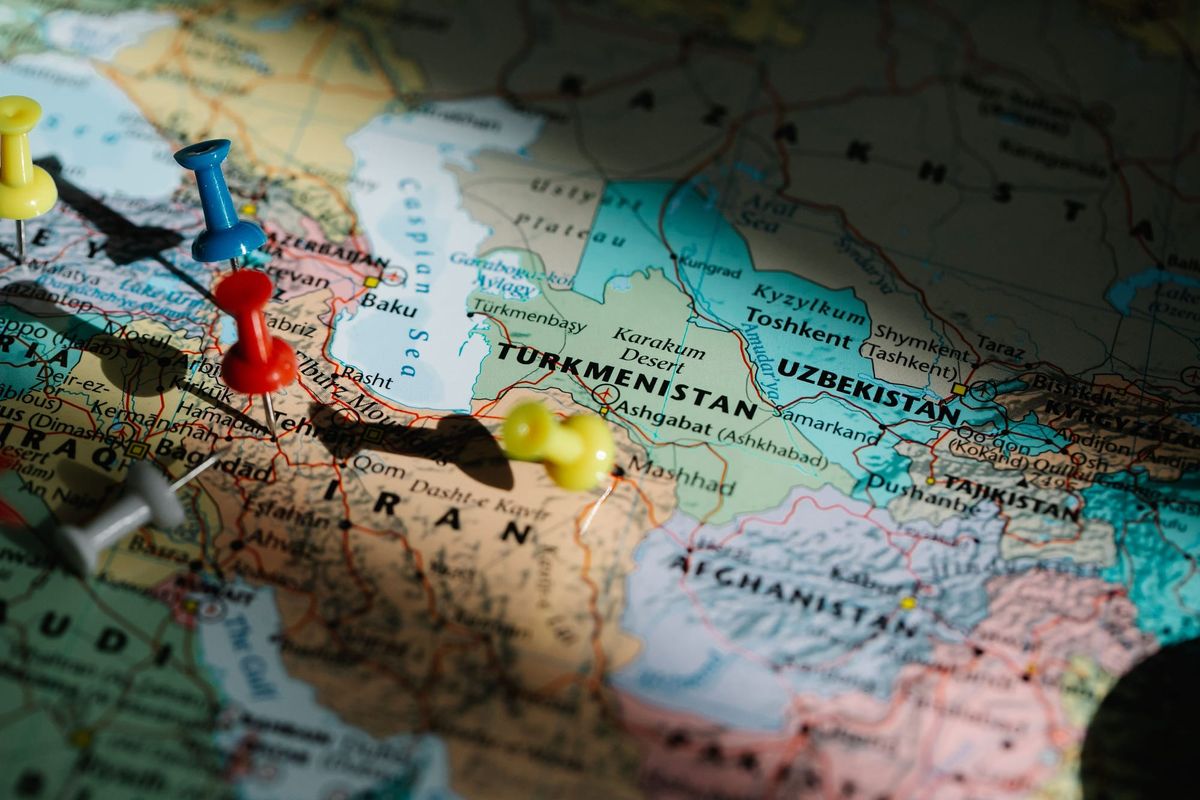
Central Asia does not appear on most Americans' mental maps of strategic competition. That is a problem. The five republics of Kazakhstan, Uzbekistan, Kyrgyzstan, Tajikistan, and Turkmenistan sit at the geographic heart of Eurasia, bordering Russia to the north, China to the east, Afghanistan and Iran to the south, and the broader Islamic world to the southwest. They hold some of the world's most significant reserves of hydrocarbons, uranium, rare earth elements, and strategic minerals. They have young, rapidly urbanizing populations, governments that are seeking, with varying degrees of enthusiasm, to reduce historical dependence on Russia's economic and security architecture, and a growing appetite for the technology partnerships and infrastructure investment that the United States is positioned to provide.
The strategic significance is not purely economic. Central Asia is the geographic fulcrum on which Eurasian connectivity balances. The trans-Caspian trade routes, the north-south energy corridors, the digital backbone that will eventually connect the Indian subcontinent to European markets: all of them run through or near these five countries. Whoever shapes the infrastructure and institutional relationships of Central Asia over the next decade shapes the connectivity architecture of the entire landmass. That is what China and Russia understand, and what drives their sustained engagement in the region.
Kazakhstan: The Anchor
Kazakhstan is the anchor of the Central Asian strategy. The largest of the five by both area and economy, Kazakhstan has pursued a consistent multi-vector foreign policy since independence, maintaining close ties with Russia through the EAEU, building deep economic links with China through BRI investments, and gradually deepening its relationship with the West through energy exports, investment partnerships, and cautious democratic reform. Its critical minerals endowment is extraordinary: the world's largest uranium producer, plus significant chromium, manganese, copper, titanium, and rare earth elements. The government has been explicit about wanting to develop processing capacity to move up the value chain rather than remain a raw-material exporter, dependent on Chinese refineries for the transformation that generates real economic value.
Kazakhstan has also demonstrated real institutional capacity. Its independent foreign policy is not performative. When Russia sought to pressure Astana into circumventing Western sanctions after the 2022 invasion of Ukraine, Kazakhstan publicly declined and took concrete steps to avoid secondary sanctions exposure. That kind of demonstrated independence, under significant pressure from a powerful neighbor, deserves recognition and reciprocal commitment from Washington.
Uzbekistan: The Opening
Uzbekistan has undergone a remarkable opening since 2016, when President Mirziyoyev implemented reforms that liberalized the currency, opened the country to foreign investment, and reduced the state's direct economic involvement in key sectors. The reforms have been real, if incomplete. The country has signed a critical minerals MOU with the United States, is hosting increasing American investment interest, and is actively positioning itself as a logistics hub for Trans-Caspian trade. Its population of 37 million is the largest in Central Asia and is young, educated, and urbanizing rapidly.
The Uzbek opening represents a window that may not remain open indefinitely. Governments that choose to reform their economies and open to international investment do so in a context of competing pressures. Chinese investment is available, Russian influence is persistent, and the domestic political economy of opening creates winners and losers whose interests will shape subsequent policy choices. The United States should treat Uzbekistan's current reform trajectory as an opportunity that requires active engagement now, rather than a stable condition that can be relied upon without reinforcement.
The Competition Is Real and Active
China has invested heavily across Central Asia through BRI, financing railways, highways, pipelines, and special economic zones that address real infrastructure needs. It has secured long-term supply agreements for Kazakh and Uzbek energy and minerals. Chinese firms are deeply embedded in construction and infrastructure. Russia maintains its EAEU leverage and extensive security relationships built over decades of Soviet and post-Soviet integration. The question is not whether China and Russia are competing in Central Asia; they clearly are, but whether the United States can offer a compelling enough alternative to shift the balance of economic relationships over time.
The answer is yes, but only if the engagement is sustained, specific, and competitive on the terms that actually matter to Central Asian governments: reliable capital at reasonable terms, technology partnerships with genuine knowledge transfer, and relationships that treat these countries as strategic partners rather than pieces on a board being managed from Washington.
What Active Engagement Looks Like
The C5+1 platform needs to move from diplomatic process to visible results. A U.S.-Central Asia Business Council, modeled on similar mechanisms that have worked in Southeast Asia, would create a structured channel for American corporate engagement with Central Asian markets, providing the deal-flow infrastructure that currently lacks institutional support. Special Economic Zones with American tax treaty provisions and guaranteed DFC political risk insurance could anchor specific investment projects that demonstrate the American model in concrete form.
Digital infrastructure in Central Asia is at a decision point that will not remain open much longer. These countries need 5G networks and are actively weighing bids from Chinese, Russian, and Western vendors. The combination of American financing through DFC, Open RAN technology from trusted vendors, and cybersecurity capacity-building through State Department programs gives the United States a viable, competitive offering. But it needs to be actively presented, competitively priced, and backed by credible long-term support commitments. Countries do not choose infrastructure vendors based on geopolitics alone. They choose based on who shows up with a real, fully packaged proposal.
Education and human capital are the longest-horizon investments with the most compounding returns. Expanding Fulbright scholarships for Central Asian students, funding regionally oriented STEM graduate programs with American university partnerships, and running technology entrepreneurship programs for young Central Asian professionals would build a generation of leaders with direct, formative experience of American institutions and values. Alumni networks persist through political transitions. The connections built in graduate programs outlast the administrations that funded them. The United States built its postwar influence partly through exactly this kind of educational investment, and the model works.
The window for shifting Central Asian countries' economic orientation before their infrastructure dependencies are fully locked in is narrowing. Every Chinese-built railway, every commissioned power plant, and every deployed Huawei 5G network closes a door that becomes progressively harder to reopen. The U.S. needs to be present in Central Asia with real resources and real proposals now, not as an abstraction, but because the choices being made today will determine the regional architecture for decades.
Security Assistance as a Complement
Economic engagement in Central Asia is most effective when paired with security assistance that addresses the real anxieties of governments in the region. The Central Asian states face a range of security challenges: border instability from Afghanistan, the risk of extremist spillover, and the underlying concern about being caught between two large and occasionally coercive neighbors. The United States has existing security assistance programs for Central Asia, including Foreign Military Financing and International Military Education and Training, that build relationships and capacity without the alliance commitments that Central Asian governments are not in a position to make.
Expanding these programs modestly, emphasizing defensive capabilities and institutional military reform rather than offensive hardware, gives Central Asian security establishments a genuine stake in the American relationship and helps them resist the pressure toward Chinese or Russian security dependence. Security relationships also tend to be durable across political transitions in ways that purely commercial relationships are not; they build institutional habits and personal networks that persist.
The Central Asian opportunity requires treating this region as genuinely important rather than instrumentally useful. The countries of Kazakhstan and Uzbekistan, and their neighbors, are not pieces on a chessboard to be maneuvered in a great-power competition. They are sovereign states with their own interests, histories, and visions for their futures. American engagement that respects that reality and offers genuine partnership rather than patronage is more likely to succeed and last than engagement that treats these countries as objects of strategy rather than as participants. That respect, consistently demonstrated over time through reliable follow-through, is ultimately what makes American partnership attractive in a region with ample reasons to be skeptical of outside powers with long reach and short attention spans.


Comments ()