
The New Resource Race: Securing Critical Minerals in the Americas
In the 21st century, critical minerals are the new oil, essential inputs for high-tech economies, from the lithium in electric vehicle batteries to the rare earth elements in wind turbines and fighter jets.
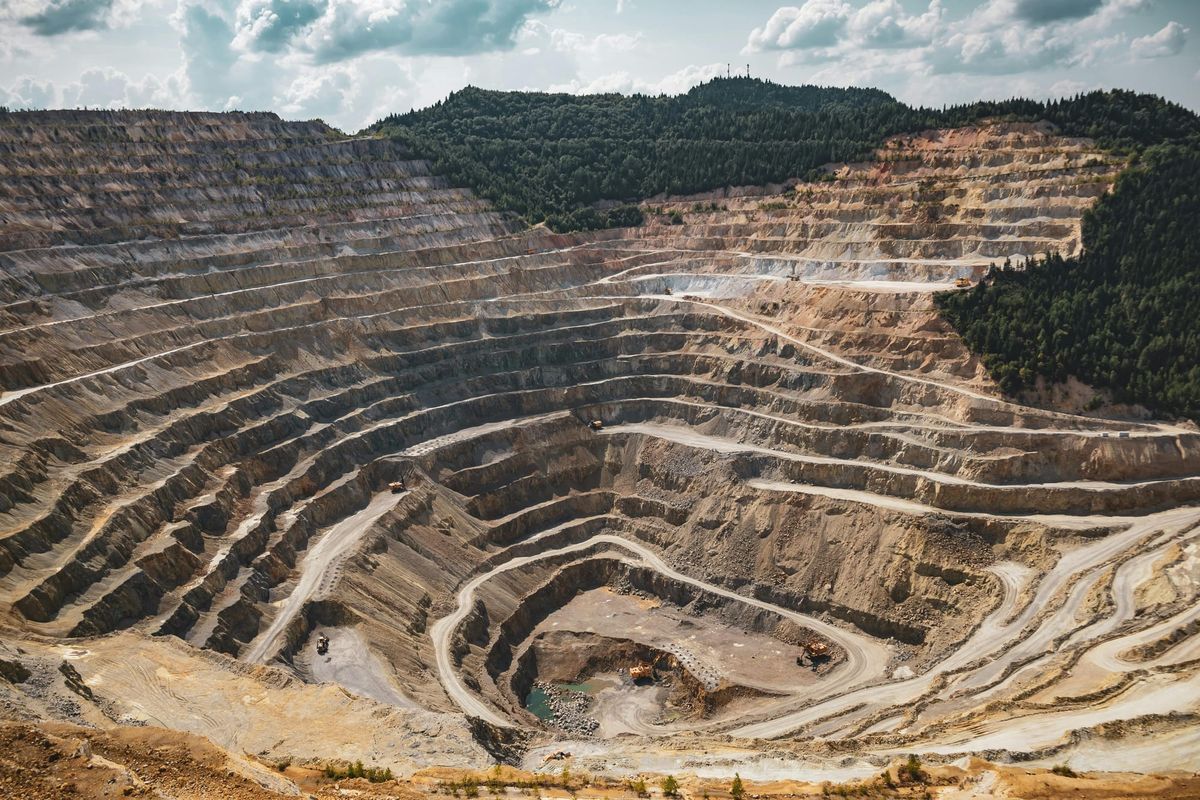
In the 21st century, critical minerals are the new oil, essential inputs for high-tech economies, from the lithium in electric vehicle batteries to the rare earth elements in wind turbines and fighter jets. Currently, the global supply of many of these minerals is dominated by China, especially in processing and refining. This poses both economic and national security risks for the U.S. and its partners. The good news: Latin America is extraordinarily rich in many critical minerals. The region hosts the “Lithium Triangle” (Bolivia, Argentina, Chile), with some of the world’s largest lithium reserves, vast copper deposits in the Andes, nickel in the Caribbean, rare-earth potential in Brazil and beyond, and other strategic resources. The task at hand is to secure and develop these resources in a way that benefits the hemisphere and reduces dependency on adversaries.
Why It Matters: From EVs to National Security
To illustrate the stakes, consider a typical electric vehicle (EV): its battery likely contains lithium (often mined in Argentina or Chile), nickel (possibly from Brazil or Cuba), manganese, and cobalt. Its electric motors use rare earth magnets (neodymium, etc.), mostly processed in China. The entire clean energy transition, solar panels, wind turbines, and grid storage, also relies on these minerals. Beyond green tech, defense systems and electronics depend on rare earths and other materials. China currently controls about 70% of rare earths production and 90% of processing. This near-monopoly is a strategic vulnerability; for instance, China has threatened to curb exports of rare earths as a geopolitical lever.
If the U.S. and allies can instead source more of these materials from Latin America (and process them in the Americas as well), it would blunt the coercive power of any one supplier. It also turns a potential liability into an asset: the Western Hemisphere could become a major supplier of responsibly sourced critical minerals to itself and the world, fueling local economic development and ensuring supply chain security. This is alliance-driven globalization in action, building a supply network among trusted partners rather than relying on a strategic competitor.
The “Lithium Triangle” and Beyond
Latin America’s mineral crown jewels start with lithium. Bolivia, Argentina, and Chile together account for an estimated 60% of the world’s lithium resources. Chile and Argentina already produce significant quantities from salt flats (brine), while Bolivia has huge untapped reserves. However, historically, Bolivia’s anti-U.S. stance and state-controlled approach kept it from developing lithium effectively (it remains Tier 3 in our earlier categorization). The strategy for the Lithium Triangle should be twofold:
- Partner with Willing Producers: Chile and Argentina have been open to foreign partnerships. The U.S. can boost collaboration by investing in new lithium extraction projects or expanding existing ones there. For example, providing funding or technical help for direct lithium extraction technologies (which are more efficient and eco-friendly than traditional evaporation ponds) could increase output and reduce water usage in arid areas. Additionally, encourage joint ventures in which U.S. companies work with local firms to share knowledge. In recent years, Chinese firms have aggressively invested in South American lithium. U.S. and allied investors must step up with competitive offers that ensure Latin American countries get a fair deal and access to higher-value jobs.
- Local Value Addition: A key part of “securing” minerals is not just digging them up, but also doing processing and refining within friendly territory. Right now, a lot of Latin America’s raw ore or brine gets shipped to China for refining (creating a “cycle of dependency”). The U.S. should facilitate the construction of conversion plants in the Americas, e.g., a lithium hydroxide plant in Argentina or Chile. This not only creates jobs locally but short-circuits China’s chokehold on refining. Similarly, for rare earths, if Brazil or other nations have mineable rare earth ore, set up separation facilities in Brazil or perhaps in the U.S., with ore imported from Brazil (like how the U.S. is doing with Australia). There is precedent: the U.S. recently signed critical mineral agreements with allies like Australia and Canada; Latin America should be included in that allied supply chain.
- Bring Bolivia in (if conditions change): Bolivia is a special case, with immense lithium, but politics have stalled development. The alliance's stance likely has to be wait-and-see for a more investment-friendly environment. However, some engagement, even now (such as technical dialogues or pilot projects), could lay the groundwork. If Bolivia’s government ever allows external partners a greater role, the U.S. and trusted firms should be ready to welcome Bolivia into the supply chain rather than letting it hand the keys to China or Russia down the line. A long-term carrot: if Bolivia were to adopt a democratic, market-friendly approach, it could join the thriving lithium economy with support from neighbors and the U.S., turning a potential future partner into a major player.
Beyond lithium, copper is critical (used in all electronics and electric wiring). Chile and Peru are the world’s #1 and #2 copper producers. Ensuring stable operations there and, if necessary, investing in new copper mines or expanding production is important (China has stakes in some mines; Western companies should remain engaged). Nickel and cobalt for batteries are found in places like Cuba (lateritic nickel, currently processed by Russians and Canadians) and the Dominican Republic, as well as some in Brazil. Perhaps down the line, a democratic Cuba could become a supplier integrated with U.S. companies, but until then, looking at alternative sources is wise; e.g., Brazil has some nickel, and recycling of battery materials is another area to invest in (to reduce raw demand).
Rare earth elements (a group of 17 obscure metals) are present in Brazil’s deposits and a few other spots (some in monazite sands, etc.). Brazil is already being “touted as an alternative” supplier, signaling that Latin America is entering the strategic calculus for these resources. The U.S. could help Brazil map its rare-earth reserves and set up pilot processing projects (the challenge is not finding rare-earth ore; it exists in various countries, but processing it cleanly is the challenge).
Other minerals that matter include: graphite (for battery anodes, with some deposits in Mexico and Brazil), bauxite (for aluminum, plentiful in Jamaica, Guyana, Brazil), iron and steel (Brazil is a big iron ore exporter; keeping steel supply friendly is good for infrastructure building). Also, uranium for nuclear plants, Canada and Australia are main allies for that, but some Latin countries like Argentina have uranium; ensuring it’s secure and available for peaceful use might be another angle.
Alliance Strategy: From Mines to Markets
To tie it all together, the alliance should create a Hemisphere Critical Minerals Initiative focusing on a few pillars:
- Financing and Insurance: Mining and processing ventures are capital-intensive. U.S. DFC and EXIM can provide loans, guarantees, or political risk insurance to companies investing in Latin American critical mineral projects. This lowers the risk hurdle. If, say, an American firm wants to build a lithium processing facility in Argentina but is concerned about political changes or expropriation, a U.S. government guarantee or a partnership with Argentine authorities can provide confidence. The same approach can encourage Latin governments to allow more foreign participation, knowing they have U.S. backing with conditions that ensure mutual benefit.
- Regulatory Alignment and Trade Deals: The U.S. could negotiate provisions in trade agreements that ensure open supply chains for critical minerals. For example, adding critical minerals cooperation chapters in updated FTAs or new digital trade deals. Also, aligning environmental and labor standards is key, many Latin American communities are rightly concerned about the impacts of mining. The alliance should champion responsible mining practices and transparency (building on initiatives like the Extractive Industries Transparency Initiative) so that the development of these resources doesn’t fuel corruption or environmental devastation, which can backfire by sparking local pushback.
- Stockpiling and Resilience: Part of security is having buffers. The U.S. National Defense Stockpile might coordinate with allies on stockpiling key minerals. Perhaps create a regional stockpile system that stores specified amounts of lithium, rare-earth oxides, etc., to be shared in an emergency. That way, if there’s a disruption, the industries depending on them (EV factories, electronics) don’t grind to a halt.
- Research and Recycling: The alliance can collaborate on research into substitutes for scarce minerals or improved recycling. If, for example, scientists can develop batteries that use less cobalt, that eases a critical bottleneck (much of the cobalt comes from Congo, raising ethical issues). Or finding synthetic materials for rare earth magnets would be game-changing. Joint R&D projects, involving U.S. labs and Latin American scientists, could focus on these goals. Additionally, establishing regional centers of excellence for recycling batteries and electronics can create a secondary supply of minerals from scrap, reducing the need to mine new ones and creating green jobs.
Countering China’s Playbook
A clear subtext here is that we are outcompeting China’s approach in Latin America. Chinese companies often strike deals that secure raw materials for shipment back to China, offering infrastructure or loans in return. A common pattern has been: build a road or rail to a mine, extract ore, ship it unrefined. The alliance should promote a counter-model: partnership rather than extraction. For instance, a Chinese deal might build a mine but then export all raw lithium carbonate to China. A U.S.-backed deal would be more likely to include building a local processing plant and training a local workforce, thereby helping the country move up the value chain.
Also, the alliance can highlight the “hidden costs” of Chinese mining deals, environmental damage, debt, lack of tech transfer, and propose cleaner, fairer alternatives. Countries are learning from experience: some African and Asian nations have begun renegotiating or regretting certain deals. Latin nations likewise might prefer an alliance route if it offers comparable economic benefits without strings attached. The Western Hemisphere Semiconductor Initiative is an example in another sector, applying similar thinking to minerals: coordinate where each country can slot into the supply chain (e.g., one country focuses on mining, another on processing, the U.S. provides high-end tech and buys the output).
A Win-Win for the Hemisphere
If done right, cooperation on critical minerals is a win-win. Latin American nations receive investment, infrastructure, and the opportunity to develop high-tech industries around their resources, rather than just being raw-material exporters. The U.S. and its manufacturers get a more diverse and secure supply of the inputs that will drive future industries (EVs, renewable energy, electronics, defense). Together, we reduce collective dependence on a single foreign supplier (China) that could otherwise leverage it against one or all of us.
Furthermore, developing these sectors can be a major boost for Latin economies. Mining has traditionally failed to benefit locals (the “resource curse”), but with proper governance and support from allies for anti-corruption and community engagement, these projects can bring jobs and infrastructure to underdeveloped regions. For example, if a lithium processing plant is built in northern Argentina, it may also include improvements to local roads, schools, and healthcare for the community as part of the investment package.
Forward-Looking Implications: By 2030, we could envision a Western Hemisphere in which a significant portion of the world’s lithium batteries use materials sourced and processed within the Americas. Perhaps a car buyer in 2030 can choose an EV knowing its battery’s lithium came from Argentina and was turned into battery cells in the U.S. or Mexico, under high environmental standards. Rare earth magnets for wind turbines or F-35 jets could be sourced from Brazil-U.S. joint ventures rather than from China.
Strategically, this would mean that no single outside power can blackmail the U.S. or its allies by cutting off these supplies. Economically, Latin America would move up the value chain, exporting not just ores but advanced materials or even finished tech components; a key to breaking out of the middle-income trap for many countries.
One can also imagine a future scenario in which, for example, a democratic Venezuela re-enters the picture with its vast oil and possibly critical minerals (Venezuela has some gold and possibly other minerals). In that case, the hemisphere’s resource basket would be even more abundant, and an alliance framework would ensure those resources are harnessed for mutual benefit, not geopolitical rivalry.
In conclusion, securing critical minerals in the Americas is about future-proofing the alliance’s prosperity and security. It’s a proactive measure to ensure that as the world’s industrial focus shifts to electrification and advanced tech, our side of the world isn’t left at the mercy of someone else’s supply whims. Instead, the Americas can be a cornerstone supplier; reliable, responsible, and rich in the rewards that come from turning raw ore into the products of tomorrow.

Comments ()