
Warfare in the Cloud: How AI and Advanced Computing Are Remaking Military Power
Both the U.S. and China see these as force multipliers that can dramatically enhance military effectiveness.

Summary: From autonomous drones to data-driven battlefield decisions, technology is transforming warfare, and the U.S. and China are racing to harness these advances for military superiority. Both nations envision armed forces boosted by artificial intelligence, cloud computing, and edge devices that can out-think and out-react any opponent. This article examines the military-tech competition between America and China, focusing on how each side is integrating AI and advanced computing into their defense strategies. We’ll look at the U.S. military’s push for a “war cloud” and networked warfare, China’s parallel drive for “intelligent-ized” forces, and what it all means for global security and stability.
The Next-Gen Digital Battlefield
The quest for technological superiority on the battlefield is age-old (think radar in WWII, precision-guided weapons in the Gulf War). Today, AI and cloud computing are the new high ground. Both the U.S. and China see these as force multipliers that can dramatically enhance military effectiveness. In essence, it’s about using machines to process information and even make decisions faster than humans can, whether that’s identifying a threat in drone video or coordinating units in a complex operation.
China’s vision for a “world-class” military centers on what it calls “intelligent-ization” of warfare. This concept goes beyond earlier efforts of digitizing forces; it means pervasive use of AI, robotics, and autonomous systems. Chinese military writings frequently discuss “algorithm-driven” warfare, the idea that victory may go to whoever has the best algorithms analyzing data and directing forces. The People’s Liberation Army (PLA) has been investing in its own cloud infrastructure and big data platforms, creating joint experimental units to test AI and unmanned systems. They’ve demonstrated swarms of drones that could potentially overwhelm an adversary’s defenses, and are reportedly applying AI to electronic warfare (like smarter jamming and cyber defenses). It’s clear that China is not sitting idle, it is striving to weave AI into command and control, surveillance, and even the tip of the spear with autonomous weapons.
The United States has articulated a similar tech-forward vision for its military, often summarized under concepts like Joint All-Domain Command and Control (JADC2). This is essentially a strategy to connect “every sensor to every shooter” in real time via a cloud network. The U.S. Department of War envisions a Hybrid Multi-Cloud Infrastructure, a unified “war cloud” spanning from large centralized servers to forward-deployed tactical units. Under a recent program (the Joint Warfighting Cloud Capability), big cloud providers like Amazon, Microsoft, Google, and Oracle are providing services to the Pentagon so data and AI models can be accessed seamlessly from the Pentagon down to the foxhole. In practical terms, this means establishing major AI compute hubs on U.S. soil for heavy-duty processing (training AI models, crunching satellite data), and also deploying smaller ruggedized servers and GPU nodes out in the field, at bases, command centers, even on vehicles. By doing so, frontline units can run AI algorithms on-site (for example, an AI on a drone or tank recognizing targets) without always relying on a satellite link back to HQ. This is crucial if communications are jammed or delayed during battle.
The U.S. military’s approach heavily involves partnering with the tech industry and adopting best practices like cloud computing, DevSecOps (speedy software development with security built-in), and continuous updates. A Pentagon official described it as moving AI “from the boardroom to the battlefield,” meaning taking AI out of PowerPoint proposals and actually deploying it with troops. The goal is to ensure warfighters at all levels have AI tools at their fingertips, whether for analyzing intel or automating routine tasks.
AI on the Frontlines: Key Applications
What will AI and advanced computing actually do for the military? Here are some of the key applications both the U.S. and China are pursuing (many of which are already in testing or limited use):
- Intelligence, Surveillance, Reconnaissance (ISR): AI can analyze the deluge of sensor data far faster than human analysts. For instance, algorithms can sift through drone video feeds or satellite images to spot threats (like missile launchers or troop movements) in minutes, something that used to take analysts hours. This dramatically shortens the “sensor-to-shooter” loop; meaning, find the target and strike it before it moves. Both militaries are investing in this; it’s been reported that AI systems have helped identify targets for quicker strikes by processing imagery and signals data.
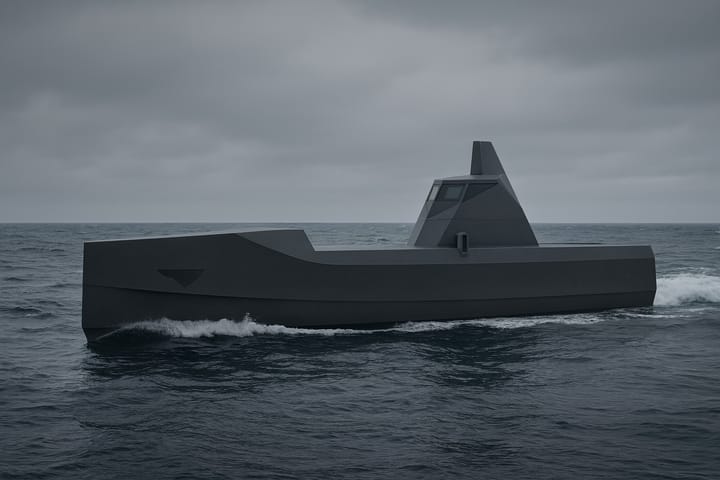
- Autonomous and Semi-Autonomous Vehicles: Drones in the sky, unmanned ground vehicles, robot submarines, AI is the brains behind these. The U.S. and China are testing swarming drones that use AI at the edge (on each drone) to coordinate with each other without needing constant human control. A swarm of dozens or hundreds of low-cost drones could confuse and overwhelm enemy defenses. Maintaining leadership in the AI that controls these swarms is a priority, because no one wants to be on the wrong side of an autonomous swarm. Both are also developing autonomous vehicles for resupply or reconnaissance. The key is reliable AI “pilots” that can handle dynamic environments.
- Decision Support and Command & Control: In command centers, cloud-based AI can act as a digital advisor to commanders. It can aggregate battlefield data from all domains (land, air, sea, space, cyber), analyze it for patterns, run rapid wargame simulations, and even suggest courses of action. The side that better fuses multisource data and presents clear options to decision-makers could operate “inside the opponent’s OODA loop,” a military term meaning you can Observe, Orient, Decide, and Act faster than the enemy, thereby outmaneuvering them. Imagine a commander getting an AI-generated recommendation for deploying forces based on thousands of simulated outcomes, that’s the promise of AI in command & control.
- Logistics and Maintenance: Wars are won as much by supply lines as by bullets. AI can optimize logistics, plotting the most efficient resupply routes, predicting when and where fuel or ammunition will be needed, and dynamically rerouting convoys if there’s a threat or delay. For maintenance, AI can do predictive maintenance on equipment: analyzing sensor data from engines or electronics to forecast failures before they happen. This means higher equipment readiness and fewer surprises. The U.S. military, learning from commercial airlines and industry, is implementing such systems to keep jets and vehicles running smoothly. It’s noted that backend advantages like these (keeping a military better supplied and with fewer breakdowns) were crucial in past conflicts, so digitizing and automating them is a big focus.
These applications highlight how broad the impact of AI/advanced computing is; from the tactical level (drones, targeting) to the strategic level (command decisions, logistics). Notably, China is actively working on all of these as well, so it’s truly a race of implementation. The PLA has formed units focusing on AI and unmanned systems, and Chinese military commentary stresses that they must win the intelligent-ization race or risk falling behind in future wars.
Risks and Rewards: Stability in an AI-Armed World
While these technologies promise stronger defense, they also raise the stakes of any confrontation. One concern some analysts express is about crisis stability. If AI allows militaries to act or react extremely fast, it might shorten the time leaders have to make decisions in a standoff, potentially leading to miscalculation. For example, an AI early warning system might recommend striking before one is sure an attack is inbound, because it calculates a high probability. There are echoes here of Cold War automation fears, like how both superpowers at times put nukes on hair-trigger alerts. Fast decisions aided by AI could escalate a situation quickly.
There’s also the unpredictability of AI behavior and the potential for accidents, especially with autonomous lethal systems. What if two opposing autonomous drones meet, do they automatically engage? How to ensure human control remains, especially over life-and-death decisions? Western militaries, including the U.S., emphasize keeping a human “in the loop” for lethal force decisions, but there’s pressure to give AI more autonomy in split-second scenarios. Internationally, we may see calls for norms or agreements on things like banning fully autonomous weapons that lack any human oversight. Already, some discussions at the UN touch on AI in warfare, though no treaty exists yet.
Despite these concerns, proponents argue that advanced tech can also enhance deterrence and stability if used wisely. If U.S. forces become so well-integrated with AI and cloud networks that they can respond to threats instantly and effectively, it could dissuade adversaries from aggressive moves. For instance, the U.S. is deploying more surveillance and AI-enhanced command networks in the Indo-Pacific (think South China Sea, Taiwan vicinity) so that any military action by China can be quickly detected and addressed. The idea is to deny the opponent confidence that they could get away with a quick strike. Additionally, the U.S. is encouraging allies like Japan, South Korea, and Australia to invest in high-tech capabilities that interlink with U.S. systems. A network of allied systems (shared intelligence, joint AI projects, etc.) creates a tech coalition that could collectively outmatch China’s advancements. This kind of unity can be stabilized by making clear that any conflict would not just be one-on-one, but one vs. many with superior combined tech power.
In summary, the infusion of AI and cloud computing into military affairs is a critical aspect of the U.S.-China competition. The U.S. is moving assertively to ensure its soldiers have unparalleled tech advantages, envisioning a force that is smarter, faster, and more autonomous, all underpinned by resilient networks. This requires not just funding gadgets, but also organizational changes: the Pentagon embracing agile software development, attracting tech talent, and strengthening cybersecurity (a highly networked force could be vulnerable to hacking, so that’s a big focus too). The payoff would be a military that can “out-think, out-pace, and out-hit” an adversary; essentially overwhelm them with superior information and decision cycles.
For China, the challenge is to not let the U.S. gain an insurmountable lead in this new warfare domain. The PLA is therefore incorporating many of the same elements, creating its own version of networked, AI-enabled operations. It helps that China’s tech industry (companies like Huawei, Alibaba, Tencent) is advanced in AI and cloud services, and the PLA can draw on that domestic expertise, though integration between private sector and military is always tricky.
Implications: The general public might soon see more demonstrations of “futuristic” defense tech, swarming drone displays, AI war games on TV, etc. This can feel like science fiction becoming real, and indeed a lot of defense strategy documents now read like a tech brochure. The arms race is partly shifting into software and compute power. Companies in the defense sector are racing to offer AI solutions; big tech firms are vying for Pentagon cloud contracts (as we saw with JWCC). On the flip side, there are ethical debates: for example, Google famously had employee pushback on a Pentagon AI contract (Project Maven) which was about AI analyzing drone footage. Society will need to grapple with how comfortable it is with AI in warfare, even as adversaries’ moves may force our hand.
For policymakers, one key will be to establish norms before there’s a crisis. That could mean engaging China (and other nations) in dialogue about limits; e.g., perhaps agreeing that humans will always confirm an AI’s decision to launch a nuclear weapon, or sharing a hotline to clarify any AI-caused mishaps. During the Cold War, such guardrails (like the “red telephone” and arms control treaties) helped prevent accidents. A similar mindset may be needed for AI: transparency measures, maybe joint monitoring of certain things to build trust that an AI won’t accidentally start a war.
As we stand today, both the U.S. and China firmly believe that “the future of military power will be decided by those who master AI, quantum, and related technologies.” It’s explicitly stated in U.S. strategy, and Chinese officials have echoed that sentiment. So, we are likely to witness a relentless push on both sides to innovate and deploy. The world can hope that this competition stays manageable; driving progress without triggering conflict. If wisely managed, the tech race could even yield innovations (like better disaster response via military drones, or AI logistics improving humanitarian aid). But if it turns into a spiral of mistrust, it could become a destabilizing factor.
In any case, one thing is clear: the armies of the near future will increasingly march to codes and algorithms as much as to drums and flags. And the nation that best integrates Silicon Valley-style innovation with military tradition may hold the advantage in the battles not just of technology, but of will and strategy. The U.S. intends for that to be itself, hence the full-court press on building the military’s digital backbone now. Keeping that edge is viewed as non-negotiable for U.S. security in this era. For all of us, the hope is that such an edge never has to be tested in conflict, but simply serves to keep the peace through strength.


Comments ()