
Anchoring America’s Defense: U.S. Military Presence and Modernization in the Indo-Pacific
Base on Guam, American forces have long underwritten a “free and open Indo-Pacific” by their very presence
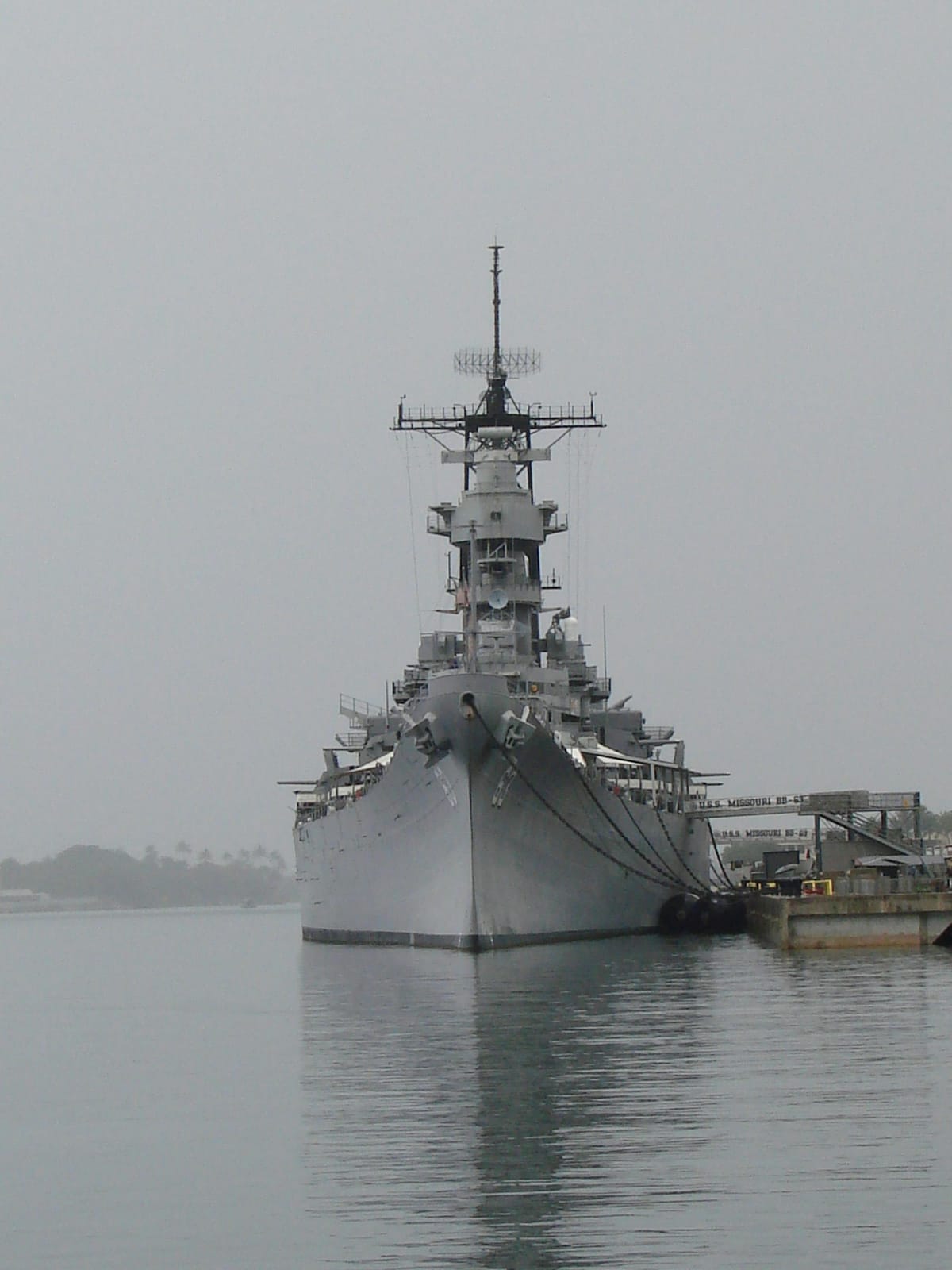
For over seventy years, the U.S. military presence in the Indo-Pacific has been the linchpin of regional stability. From the massive naval base at Yokosuka in Japan to the sprawling Andersen Air Force Base on Guam, American forces have long underwritten a “free and open Indo-Pacific” by their very presence. Today, however, that legacy posture is undergoing a pivotal transformation. The strategic environment has shifted; China’s military expansion and North Korea’s nuclear advances pose new challenges, while emerging technologies like hypersonic missiles and artificial intelligence are redefining warfare. In response, the United States is modernizing both its hardware and its footprint across the Indo-Pacific. The goal is clear: to maintain a credible deterrent that prevents conflict, reassures allies, and responds rapidly to crises, all while avoiding provocation or miscalculation. This balancing act between strength and restraint defines America’s military strategy in the region.
A Shifting Presence: From Hub Bases to a Network of Posts
The days when a few “hub” bases alone could guarantee U.S. dominance in Asia are fading. In an era of long-range precision missiles, large bases like those on Okinawa or Guam are potential targets. The U.S. is adapting by distributing its forces more widely and deepening access to partner facilities. Recent agreements exemplify this shift. In the Philippines, a formal treaty ally that had been distanced under previous leadership, Washington secured expanded access to local bases through the Enhanced Defense Cooperation Agreement, reopening sites for U.S. rotational deployments.
Similar arrangements are being explored with other partners; U.S. forces train regularly in Indonesia and could someday obtain periodic access to Vietnamese ports or Indonesian airfields. This emerging network of smaller footprints, from Australia’s northern coast (where U.S. Marines rotate) to Pacific island airstrips, makes the U.S. presence more resilient. It complicates any adversary’s calculations by presenting numerous operating locations rather than a few concentrated targets. As a long-term vision, U.S. planners foresee an Indo-Pacific posture that is “more distributed, with access to more partner bases” across the region. In practice, a U.S. Navy task force might leverage ports in India or Palau for logistics, or an Air Force squadron could use a highway airstrip in a partner country during a contingency, flexibility that keeps potential aggressors guessing.
At the same time, the U.S. is reinforcing its traditional anchor points. Japan and South Korea remain home to tens of thousands of American troops, and these allies are increasing their own commitments. Japan, in particular, has embarked on a historic defense buildup, pledging to double defense spending and acquire new capabilities, such as long-range missiles. The U.S. encourages such steps as part of a doctrine of shared responsibility.
The 2025 U.S. National Security Strategy pointedly calls for “burden-shifting,” not just burden-sharing, meaning allies should take on greater roles in their own defense and regional security initiatives. In Northeast Asia, this has translated into tighter trilateral cooperation among Washington, Tokyo, and Seoul after years of estrangement, including renewed intelligence-sharing agreements and coordinated missile defense drills in the face of North Korean threats. And in Southeast Asia, treaty ally the Philippines offers a strategic vertex of a nascent “triangular” alliance framework with Japan and Korea, controlling vital sea lanes in the south. By investing in both old alliances and novel partnerships, the U.S. is evolving from a hub-and-spoke model toward a mesh of alliances and security arrangements that blankets the Indo-Pacific.
Modernizing for a New Era of Warfare
Beyond where forces are stationed, how those forces fight is at the heart of modernization. The Indo-Pacific theater, with its vast distances and advanced adversaries, is spurring the U.S. military to innovate rapidly. A key focus is naval and air modernization. The U.S. Navy is deploying more advanced submarines and exploring unmanned surface and underwater vessels to enhance surveillance and strike capabilities across the Pacific. The development of stealthier, longer-range weapons aims to maintain America’s ability to project power even as China’s anti-access “bubble” expands. The U.S. Army and Marine Corps are also adapting, with Marines testing new concepts of expeditionary, highly mobile units that can hop between islands (an approach known as “island-hopping 2.0”) to set up missile batteries or forward refueling points. These tactics hark back to World War II’s Pacific campaigns, updated for the missile age.
Technology cooperation with allies plays a critical role in this modernization drive. Through arrangements like AUKUS, the U.S. and UK will help Australia acquire nuclear-powered submarines, dramatically extending the reach of a key ally’s navy. But AUKUS is more than submarines; its second pillar focuses on joint development of cutting-edge military tech, including AI, cyber defenses, quantum sensors, and hypersonic missiles. This consortium approach means breakthroughs can be quickly shared among trusted partners to maintain a collective edge. Likewise, U.S. and Japanese defense firms are co-developing advanced interceptor missiles, and South Korea, a global leader in fields like robotics, is working with the U.S. on autonomous systems.
The vision is an interconnected defense industrial base across allies, where innovation and production are coordinated. This is “defense-industrial integration” in action: for example, a future fighter jet might have American engines, Japanese avionics, and Australian AI-assisted targeting software, all meshing seamlessly. America’s AI Action Plan emphasizes exporting the full stack of U.S. high-tech systems to allies, in part to ensure they do not become dependent on rival powers’ technology. We see that strategy unfolding in the Indo-Pacific as Washington shares more sensitive capabilities, from state-of-the-art drones offered to India to next-generation F-35 fighters for Japan and South Korea, building a tech advantage that adversaries will find hard to match or penetrate.
Deterrence Through Strength and Clarity
Ultimately, the purpose of America’s evolving military presence and modernization is to deter aggression before it happens. Strengthening U.S. forces and integrating them with capable allies lowers the likelihood that any adversary (principally China or North Korea) would calculate that it could achieve a quick, decisive victory by force. Deterrence is not just about raw power, however; it is also about signaling and avoiding miscommunication. The U.S. aims to make its commitments unmistakably clear.
For instance, by explicitly affirming that treaty allies like Japan and the Philippines are covered by U.S. defense guarantees (including in new domains like cyber), Washington removes any doubt that might tempt an adventurist move. At the same time, U.S. officials communicate that American forces are present to prevent conflict, not to start one. This message is important for regional audiences who may fear being caught in the crossfire between the U.S. and China.
The calibrated approach is evident in U.S. posture decisions. Deploying robust capabilities, such as keeping aircraft carrier strike groups in the Western Pacific or fielding new missile defenses, signals resolve. Yet the U.S. also exercises restraint by, for example, not permanently basing intermediate-range missiles in certain locations to avoid triggering an escalatory spiral. The line between assurance and provocation is carefully managed through dialogues (both with allies and with China). The desired end state is a “vigilant posture in the Indo-Pacific”, backed by a “renewed defense industrial base” and greater allied investment, that collectively “prevent[s] conflict” in the region. In plainer terms, the U.S. is saying: we are here, we are strong, and we are united with our partners, so no one should gamble on aggression.
Looking Ahead: A Stable Balance or an Arms Race?
The trajectory of U.S. military adaptation in the Indo-Pacific will significantly influence the region’s future. If done right, these efforts will yield a stabilizing balance of power, one in which all countries, including China, understand that war would be unwinnable and hugely costly, thereby remaining deterred. Effective deterrence can create space for diplomacy and economic development to flourish beneath the military shield.
Already, there are promising signs: new U.S. force posture agreements and joint exercises have bolstered confidence among allies from Taipei to Manila that Washington will not abandon the region. Over the next decade, we may see an Indo-Pacific where American and allied warships continuously patrol vital waterways, advanced U.S.-made early warning systems guard the skies of friendly nations, and a lattice of combined operations centers enables real-time coordination among the U.S., Japan, Australia, South Korea, and others. This integrated defensive web could make conventional conflict in the Indo-Pacific virtually implausible by 2035.
However, there is also the risk of an arms race or miscalculation if these efforts are not carefully managed. China’s leadership views many U.S. moves as encirclement and could respond by accelerating its own military buildup or adopting a more aggressive posture, which in turn could spur further U.S. and allied countermeasures. To avoid a destabilizing spiral, the U.S. must pair its military strength with open lines of communication to Beijing, clear red lines, and confidence-building measures where possible (such as agreements to avoid incidents at sea).
The coming years will test whether the Indo-Pacific can remain at peace even as it bristles with modernized forces. Washington’s bet is that through prudent modernization and a robust network of allies, it can keep the peace by convincing any would-be aggressor that today is not the day to test American resolve. If that bet holds, the Indo-Pacific will continue to enjoy the stability that underpins its prosperity; an outcome that benefits all players in the region, including America and China.

Comments ()