
From Asia-Pacific to Indo-Pacific: An Evolving Strategic Geography
The decisions made in this region will shape the balance of power in the 21st century. Yet this prosperous expanse is also a theater of sharpening contradictions.
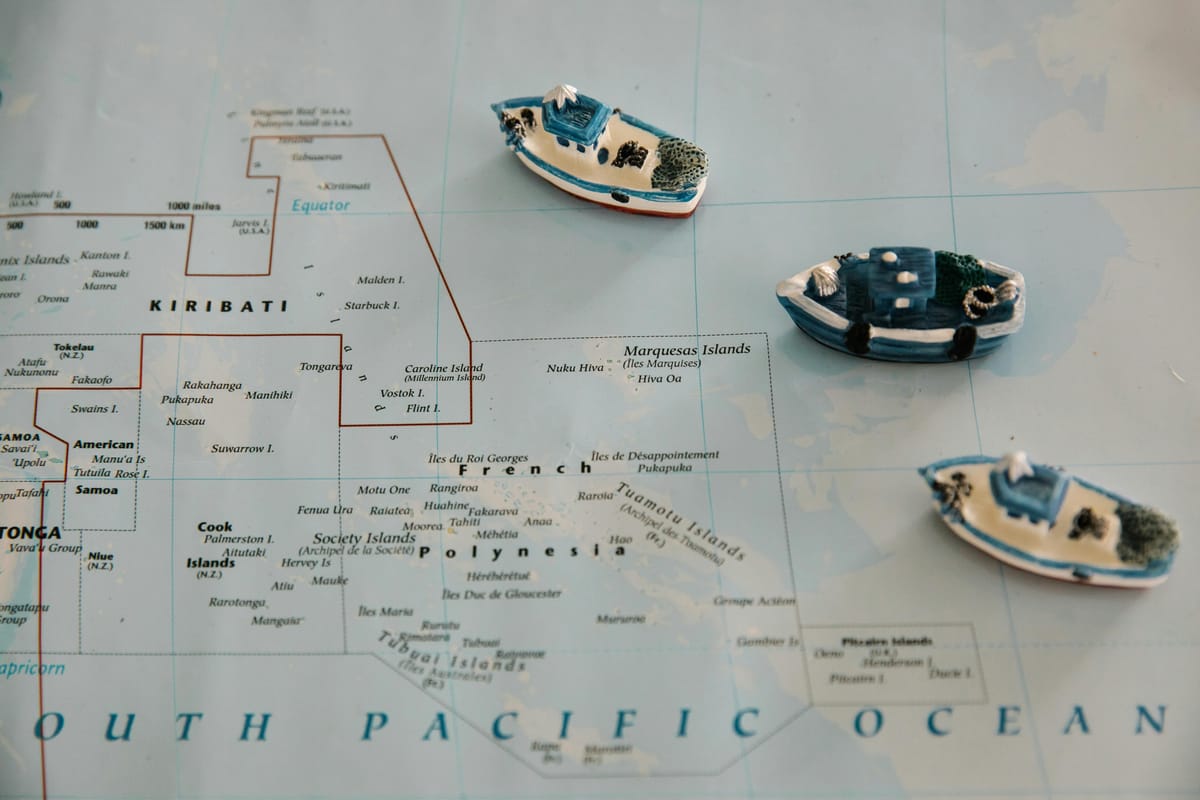
The Indo-Pacific region has rapidly transformed into the world’s primary stage for both economic dynamism and great-power rivalry. Once referred to simply as the “Asia-Pacific,” the geography of strategic focus now explicitly spans the vast waters from the Indian Ocean to the Pacific. This expanded concept reflects a shifting reality: roughly half of global GDP is now concentrated in the Indo-Pacific, home to many of the fastest-growing markets. The decisions made in this region will shape the balance of power in the 21st century. Yet this prosperous expanse is also a theater of sharpening contradictions. It is a region where booming trade routes and digital corridors intersect with flashpoints like the South China Sea and the Taiwan Strait, making the Indo-Pacific both an engine of global growth and a crucible of strategic tension.
The Indo-Pacific Redefined
For decades, American strategy spoke of the “Asia-Pacific,” implicitly focusing on East Asia and the Pacific Rim. The rise of India and the recognition of the Indian Ocean’s strategic linkage to the Pacific have given birth to the broader “Indo-Pacific” concept. This redefinition is not just semantic. It acknowledges that the security and prosperity of countries from the west coast of India to the Central Pacific islands are interdependent. A free and open Indo-Pacific, as U.S. policy now emphasizes, means more than protecting familiar sea lanes; it entails preserving the sovereignty and agency of diverse nations across two oceans. Strategic geography in this context includes choke points like the Malacca Strait and critical waterways such as the South China Sea, through which a large share of global trade flows. The region’s evolving geography also highlights new axes of cooperation: for instance, new groupings like the Quad (linking the U.S., Japan, India, and Australia) embody Indo-Pacific democracies bridging old sub-regional divides.
Importantly, viewing Asia through an Indo-Pacific lens underscores the role of nations that have often been overlooked in great-power calculations. Middle powers like Indonesia, which straddle vital maritime crossroads, and Vietnam now find themselves wielding greater strategic weight. Even the Pacific Island countries, small in population, command vast swaths of ocean and crucial votes in international forums. Their alignment can influence the balance of influence between larger powers. China’s courtship of tiny island states like the Solomon Islands (including a controversial security pact) and America’s renewed focus on Pacific partnerships both show that no corner of this geography is too remote to matter. The Indo-Pacific is truly an “expanded chessboard” where infrastructure deals, naval patrols, and digital connectivity initiatives are all moves in a larger strategic game.
Chokepoints and Connections
Geography confers both opportunities and vulnerabilities. The Indo-Pacific’s maritime chokepoints, from the narrow Malacca and Sunda Straits in Southeast Asia to the passages of the first island chain in the Western Pacific, are arteries of commerce that double as potential pressure points in times of conflict. Ensuring these sea lanes remain open and free of coercion is a core interest for the United States and its allies. U.S. strategy explicitly opposes any attempt by any power to control or impose “tolls” on these crucial routes, recognizing that freedom of navigation is the lifeblood of Indo-Pacific trade. The South China Sea, for example, carries an estimated one-third of global shipping and has become a focal point of overlapping territorial claims and militarization. Similarly, the Taiwan Strait, only about 160 km wide, is not just a flashpoint between China and Taiwan but a corridor through which a significant share of East Asia’s trade and energy supplies transit. In short, control of these chokepoints could enable a hostile power to strangle the economies of rival nations; a scenario Washington and regional partners are determined to prevent.
On the other hand, the Indo-Pacific is also being knit together by new connections that reduce distances and create strategic depth for like-minded nations. The development of infrastructure corridors and digital links is eroding some of the tyranny of distance that long hampered regional integration. High-speed undersea internet cables, proposed digital trade zones, and initiatives like the Partnership for Global Infrastructure and Investment (PGII) are stitching together an Indo-Pacific network on favorable terms. The PGII, led by the G7 nations, aims to mobilize $600 billion in global infrastructure financing by 2027, with a substantial share directed to strategic Indo-Pacific projects. These include ports, energy grids, and fiber-optic cables that, when built to high standards, improve regional connectivity while providing alternatives to Beijing’s Belt and Road Initiative. In effect, the U.S. and its allies are leveraging geography by investing in links that bind friendly nations closer, whether it’s a new Indo-Pacific submarine cable network or an enhanced transportation corridor from South Asia to Southeast Asia. Each road, rail line, and broadband network built under transparent terms is also a strategic asset: it strengthens the fabric of a free Indo-Pacific and reduces the temptation or need for countries to accept Chinese-funded projects that might come with strings attached.
Competing Visions and Strategic Alignments
As the Indo-Pacific’s profile has risen, so too have competing visions for its future order. China’s expansive Belt and Road investments, fortified islands in the South China Sea, and diplomatic inroads aim to reshape the region’s geography into a Sinocentric network of influence. Beijing’s vision implicitly divides the Indo-Pacific into spheres of influence, where economic dependence could translate into strategic compliance. The United States, by contrast, advocates an order where no single power dominates and where even the smallest states maintain their sovereign right to make choices. In practical terms, this means bolstering the collective strength of U.S. alliances and partnerships across the region. From Japan and South Korea in Northeast Asia, down through the ASEAN countries and across to India, Washington is linking together a coalition in support of an open system. These alliances and partnerships form a patchwork beginning to cover the Indo-Pacific, offering a counterweight to coercion. Indeed, U.S. treaties with allies such as Japan, Australia, the Philippines, and South Korea anchor key parts of the region, while burgeoning strategic ties with countries such as India, Vietnam, and Indonesia extend the network’s reach.
This alignment is as much about economics and values as about military ties. Nations are drawn to a vision that promises prosperity without domination, one in which high-standard trade and investment, not debt traps, fuel development. We see growing consensus around principles such as the rule of law at sea, fair and reciprocal trade, and digital freedom rather than authoritarian surveillance. The U.S. National Security Strategy of 2025 emphasizes that, to “thrive at home, we must successfully compete” in key regions such as the Indo-Pacific. It also reminds us that shaping the “rules of the road,” from navigation rights to technology standards, in line with international law, is critical because those rules are being contested in the Indo-Pacific more than anywhere else. In other words, geography has made this region the arena where the norms and systems of the 21st-century global order will likely be decided.
Looking Ahead: Implications for U.S. Strategy
The evolving strategic geography of the Indo-Pacific carries profound implications for American policy. First, it demands a truly comprehensive approach. The United States can no longer afford to treat the Indian Ocean and the Pacific as separate strategic spheres; what happens in the South China Sea or the Pacific Islands can affect, say, India’s security, and vice versa. U.S. strategy is adjusting to this reality by broadening diplomatic and military outreach across the map, as evidenced by the opening of new U.S. embassies in Pacific Island countries and enhanced naval logistics agreements with India and Singapore. Second, the United States must help Indo-Pacific nations bolster their resilience at key geographic pressure points. Whether by pre-positioning supplies near chokepoints, conducting joint patrols through contested waters, or aiding partners in coastal surveillance, American engagement will center on ensuring that no single nation can bottle up the region’s commerce or intimidate its neighbors.
Finally, appreciating this new geography means embracing the idea of a networked region. America’s strength will increasingly lie in convening and leading coalitions tailored to specific challenges; a flexible geometry of partnerships. In practice, that could mean a disaster response task force spanning the Pacific, an infrastructure investment consortium for South Asia, or a joint maritime training initiative in Southeast Asia. The Indo-Pacific of 2035 could well feature a lattice of U.S.-led partnerships crisscrossing the map, if Washington continues to help weave that fabric. By understanding and acting on the Indo-Pacific’s evolving strategic geography, the United States and its allies can ensure that this vast region’s future is one of open waterways, connected economies, and sovereign nations charting their own course, rather than a map re-divided into spheres of domination.

Comments ()